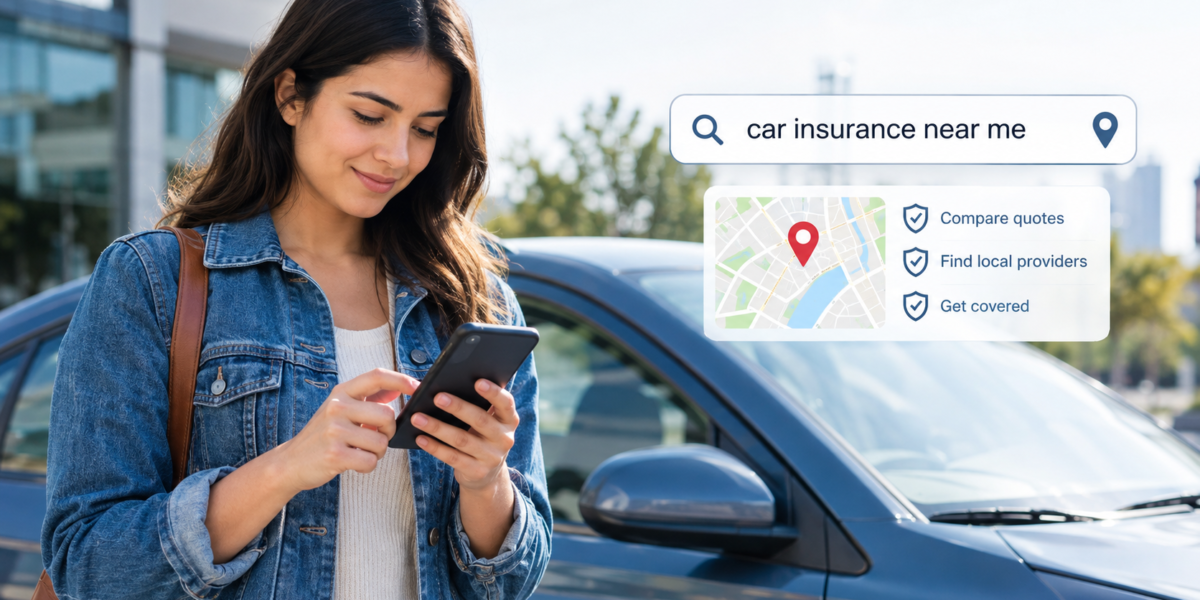
Car Insurance Near Me: How to Find and Compare the Right Coverage
When someone searches for car insurance near me, they usually want more than a list of insurance companies. They want to know which insurers serve their area, what coverage they need, how much a policy may cost, and how to compare quotes without choosing coverage based only on the lowest price.
The best way to shop is to compare several policies using the same coverage limits and deductibles. Local availability matters, but the closest insurance office is not necessarily the best option. Online insurers, independent agents, and local agencies may all provide different ways to get coverage and compare options.
Because insurance rules vary by location, always check the requirements that apply where your vehicle is registered and primarily used.
What Does Car Insurance Near Me Mean?
Car insurance near me generally refers to insurance providers, agents, brokers, or online insurers that can provide auto insurance in your location.
A local search can help you find:
• Insurance companies that operate in your area
• Independent insurance agents who represent multiple insurers
• Local offices where you can speak with an agent
• Online insurers licensed to sell coverage in your area
• Quote comparison services
• Coverage options that meet your local legal requirements
Your location can matter because insurance regulations, available insurers, pricing factors, and required coverage can differ between jurisdictions.
For that reason, searching for a nearby insurer is only the first step. You should compare the actual policy, coverage limits, deductibles, exclusions, service, and total premium before making a decision.
How to Find Car Insurance Near You
Car Insurance Start by identifying insurers that are available where you live. You can search online, contact local insurance agencies, or use your state’s insurance regulator to verify available companies and consumer resources.
You do not necessarily need a physical insurance office nearby. Many insurers allow customers to request quotes, purchase policies, make payments, and communicate with representatives online or by phone.
When searching locally, consider three main options.
Local Insurance Agents
A local agent can explain coverage options and help you compare policies. An independent agent may represent multiple insurance companies, while an exclusive agent generally represents one insurer.
Ask the agent which companies they represent and whether the quotes being provided use the same coverage limits.
Direct Insurance Companies
Some insurers sell directly to customers through their websites or telephone systems. This can be convenient if you prefer managing your policy online.
Direct purchasing does not automatically mean a policy is better or cheaper. The important comparison is the coverage and price offered for your particular situation.
Online Quote Services
Online quote tools can make comparison shopping faster. However, entering your information into a quote form does not mean every quote provides equivalent protection.
Before comparing prices, make sure the policies have comparable liability limits, deductibles, and optional coverage.
What Information Do You Need for a Car Insurance Quote?
Insurance companies normally need information about you, your vehicle, and how the vehicle is used.
You may be asked for information such as:
• Your location
• Vehicle identification information
• Vehicle make, model, and year
• How the vehicle is used
• Approximate annual mileage
• Driving history
• Claims history
• Current or previous insurance information
• Drivers who regularly use the vehicle
• Desired coverage and deductibles
Providing accurate information is important. Incorrect information can result in an inaccurate quote and may create problems when you need to make a claim.
What Coverage Should You Compare?
Price is only meaningful when you know what you are buying.
Car insurance commonly includes several different types of protection.
Liability Coverage
Liability insurance generally helps pay for injuries or property damage that you are legally responsible for causing to another person.
Liability coverage commonly includes bodily injury liability and property damage liability.
The minimum required limits vary by jurisdiction. A legal minimum is not necessarily the same as the amount of coverage that is appropriate for your circumstances.
Collision Coverage
Collision coverage can help pay for damage to your vehicle resulting from a covered collision, subject to the policy terms and deductible.
It may be particularly relevant when repairing or replacing the vehicle would create a significant financial burden.
Comprehensive Coverage
Comprehensive coverage generally applies to covered damage that is not caused by a collision. Depending on the policy, examples can include theft, fire, vandalism, falling objects, or certain weather-related damage.
Coverage details and exclusions vary by policy.
Uninsured and Underinsured Motorist Coverage
This coverage can help protect you when an accident involves a driver who has no insurance or does not have enough insurance to cover certain losses.
Whether this coverage is required, optional, or subject to specific rules depends on the jurisdiction.
Personal Injury Protection or Medical Payments
Depending on where you live, your policy may offer or require coverage for medical expenses and related losses after an accident.
Personal injury protection can provide broader benefits in some jurisdictions, potentially including certain medical expenses and lost income.
Always check the rules that apply in your location.
How to Compare Car Insurance Quotes Near You
Getting multiple quotes is useful, but comparing the numbers alone can be misleading Car Insurance.
Suppose one insurer offers a lower premium than another. Before choosing the cheaper quote, check whether both policies have the same:
| Comparison factor | What to check |
|---|---|
| Liability limits | Are the bodily injury and property damage limits comparable? |
| Deductibles | How much would you pay before certain covered losses are paid? |
| Collision | Is damage to your vehicle covered? |
| Comprehensive | Are non-collision losses covered? |
| Uninsured motorist | Is this protection included or available? |
| Additional coverage | Are rental, roadside, or other options included? |
| Exclusions | What situations are specifically excluded? |
| Premium | What is the total cost for the same policy period? |
| Payment terms | Are there differences between payment options? |
| Service | How can you contact the insurer and report a claim? |
The goal is not simply to find the cheapest insurance. It is to find an appropriate balance between coverage, cost, service, and financial risk.
Why Can Car Insurance Prices Differ Near You?
Two drivers living in the same general area can receive different insurance prices.
Insurers evaluate risk using factors permitted under applicable laws and their underwriting and rating practices. Factors can include the driver’s history, vehicle, coverage selections, mileage, claims history, and location.
Your chosen deductible can also affect the premium. A higher deductible may reduce the premium in some circumstances, but it means you may have to pay more yourself after a covered loss.
The vehicle itself can also matter. Repair costs, vehicle characteristics, usage, and other factors can affect insurance pricing.
Because insurers use different rating models and offer different coverage options, comparing multiple quotes can be worthwhile.
Is Local Car Insurance Always Cheaper?
No.
A nearby insurance office may provide excellent service, but physical proximity does not guarantee a lower premium.
An insurer that operates primarily online may offer competitive pricing, while a local independent agent may provide access to several insurers. The best option depends on your coverage needs, eligibility, location, and the policies available to you.
Instead of assuming that local means cheaper, compare actual quotes.
How to Find Affordable Car Insurance Near You
If your goal is to reduce the cost of coverage, start with comparison shopping rather than immediately reducing important protection.
Consider these steps:
Compare Multiple Insurers
Different insurers can charge different premiums for comparable coverage. Request several quotes and make sure the coverage limits are comparable.
Ask About Available Discounts
Insurance companies may offer discounts based on factors such as driver characteristics, vehicle features, policy combinations, payment arrangements, or other qualifying circumstances.
Discounts vary, so ask each insurer which ones may apply to you.
Review Your Deductibles
A deductible affects how much you pay yourself when a covered claim occurs.
Do not choose a deductible simply because it produces a lower premium. Make sure you could reasonably afford the deductible if you needed to make a claim.
Review Your Coverage Regularly
Your car insurance needs can change after purchasing a vehicle, adding or removing a driver, changing how much you drive, or experiencing other significant changes.
Review your policy periodically and update information when necessary.
Consider the Vehicle Before Buying
Insurance cost can be one factor to consider when choosing a vehicle. A vehicle that is expensive to repair or has other characteristics associated with higher insurance risk may cost more to insure.
Getting an insurance quote before buying a car can help you understand the potential total ownership cost.
What Does Full Coverage Mean?
Full coverage is a common term used by consumers, but it does not describe one universal insurance policy.
An auto policy is made up of individual coverages, limits, deductibles, conditions, and exclusions. Someone using the phrase full coverage might mean liability, collision, comprehensive, and additional protection, but the exact combination can differ.
Instead of asking only for full coverage, ask the insurer to clearly list the coverage included in the quote.
This makes it much easier to compare policies accurately.
Local Agent vs Online Car Insurance
Both approaches can work well.
| Option | Potential advantage | What to consider |
|---|---|---|
| Local agent | Personal assistance | May represent one or multiple insurers |
| Independent agent | Can compare insurers they represent | Does not necessarily represent every insurer |
| Direct insurer | Convenient online or phone service | You may need to compare companies yourself |
| Online comparison | Faster initial comparison | Make sure quotes represent comparable coverage |
Your choice should depend on how much assistance you want and how you prefer to manage your policy.
Questions to Ask Before Buying
Before selecting a policy, ask the insurer or agent:
- What liability limits are included?
- What are the collision and comprehensive deductibles?
- Is uninsured or underinsured motorist coverage included?
- Are there optional coverages that may be useful for my situation?
- What exclusions should I understand?
- How are claims reported?
- Can I manage the policy online?
- What discounts am I eligible for?
- What happens if another driver regularly uses my vehicle?
- Are there differences between paying monthly and paying the full policy premium?
These questions can reveal important differences that are not obvious from the quoted premium.
Common Mistakes When Searching for Car Insurance Near Me
Choosing the Lowest Quote Automatically
The cheapest quote may have lower limits, higher deductibles, or fewer optional protections.
Compare the complete policy rather than the headline price.
Comparing Different Coverage Levels
A quote with lower liability limits cannot be fairly compared with another quote offering substantially higher limits.
Keep the coverage structure as similar as possible during your comparison.
Ignoring Deductibles
A lower premium can come with a higher deductible. Consider both the premium and the amount you would need to pay after a covered claim.
Assuming Every Local Agent Offers the Same Companies
Agents can have different relationships with insurers. Ask which companies they represent.
Waiting Until After Buying a Car
Insurance costs can affect the overall cost of owning a vehicle. Getting quotes before purchasing can help you make a better-informed decision.
Providing Inaccurate Information
Your quote should reflect your actual circumstances. Be accurate about drivers, vehicle use, mileage, location, and other requested information.
What If You Cannot Find Affordable Coverage?
If standard insurers are difficult to access or the quotes you receive are unexpectedly high, contact your state insurance department for consumer information and available resources.
Some jurisdictions have programs or market arrangements for drivers who have difficulty obtaining coverage through the standard market.
Do not drive without meeting the insurance or financial responsibility requirements that apply to you. Requirements vary by jurisdiction.
How to Choose the Right Car Insurance Near You
A practical approach is to follow these steps:
- Determine the insurance requirements where your vehicle is registered.
- Decide what level of protection you need beyond the legal minimum.
- Gather accurate driver and vehicle information.
- Request quotes from multiple insurers or agents.
- Compare the same coverage limits and deductibles.
- Review exclusions and optional coverage.
- Check discounts that may apply.
- Consider customer service and claims handling.
- Review the final policy documents before purchasing.
- Keep your insurance information updated when your circumstances change.
The right policy is not necessarily the one with the lowest monthly price. It is the policy that provides suitable protection at a cost you can reasonably manage.
Frequently Asked Questions
How do I find car insurance near me?
You can search for local insurance agents, compare insurers online, or use your state insurance department’s resources. You do not necessarily need a physical office nearby because many insurers offer online and telephone services.
Is car insurance cheaper if I use a local company?
Not necessarily. Insurance prices depend on factors such as your location, driving history, vehicle, coverage choices, and the insurer’s rating practices. Compare several quotes rather than assuming a local company will be cheaper.
How many car insurance quotes should I compare?
There is no universal number that guarantees the best price. Comparing several insurers can help you identify differences in premiums and coverage. The key is to compare equivalent coverage rather than simply collecting the largest number of quotes.
What information do I need to get a car insurance quote?
You may need information about your vehicle, drivers, location, vehicle use, mileage, driving history, claims history, existing insurance, and the coverage you want.
What is the difference between liability and full coverage?
Liability coverage generally protects against certain claims for injuries or property damage you cause to others. Full coverage is not a standardized policy term and can refer to a combination of coverages such as liability, collision, and comprehensive.
Should I choose the cheapest car insurance?
Not automatically. A lower premium may come with lower coverage limits, higher deductibles, or fewer protections. Compare the policy details before choosing based on price.
Can I get car insurance online instead of using a local agent?
Yes, many insurers provide online quoting, purchasing, payments, and policy management. A local agent may be preferable if you want personal assistance or help comparing insurers they represent.
Why does my car insurance price change after I move?
Insurance pricing and requirements can change based on location. Moving can change the rating factors and regulations applicable to your policy, so you should notify your insurer when your address changes.
Final Takeaway
Searching for car insurance near me is a useful starting point, but proximity should not be the only deciding factor. Compare several insurers, check the coverage carefully, understand deductibles and exclusions, and verify the requirements that apply in your location.
A good comparison focuses on both price and protection. Once you understand what each quote actually covers, you can make a more informed decision instead of choosing a policy based solely on the cheapest number.
You may also find blog on below
Cheap Car Insurance
Related Wealth Articles

Working Capital Management Tutorial Explained: A Practical Guide
Working capital management is the process of managing a business’s short-term assets and liabilities to support daily operations,…
Capital One Auto Navigator: A Guide to Car Shopping and Financing
What Is Capital One Auto Navigator? Capital One Auto Navigator is a car-shopping and financing platform designed to…
1 Discussion Comment