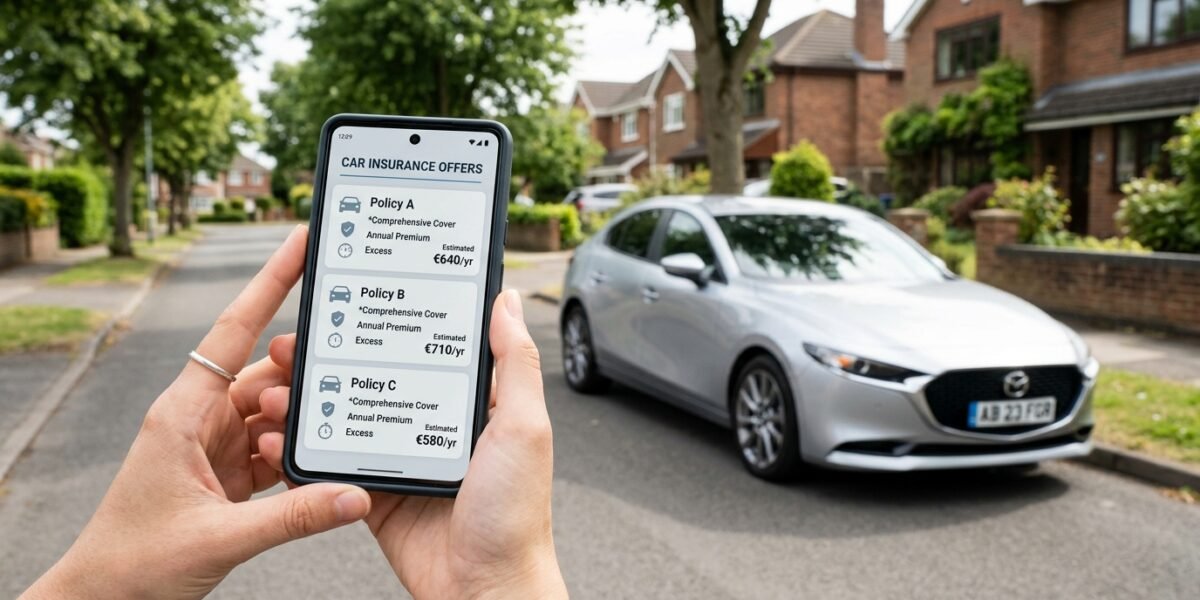
Cheap Car Insurance: How to Find Lower-Cost Coverage
Cheap car insurance is not necessarily the policy with the lowest advertised price. The better goal is to find affordable coverage that meets your legal requirements and gives you appropriate protection.
Insurance premiums vary because insurers assess risk differently, and the price can change based on factors such as your driving record, location, vehicle, mileage, coverage choices, deductibles, and applicable discounts. In the United States, for example, the National Association of Insurance Commissioners (NAIC) notes that insurers can charge different rates for the same coverage, which is why comparing quotes is important.
The most reliable way to look for cheaper coverage is to compare equivalent policies, check available discounts, review your deductibles and coverage needs, and avoid cutting protection simply to reduce the premium.
What Is Cheap Car Insurance?
Cheap car insurance generally means car insurance that provides the coverage you need at a competitive price.
The cheapest policy for one driver may not be the cheapest or most suitable choice for another. A lower premium can sometimes result from having higher deductibles, lower coverage limits, fewer optional protections, or a different insurer’s assessment of risk.
That is why price should be compared alongside coverage rather than on its own.
There is also no universal definition of “full coverage.” Auto insurance is normally made up of different types of coverage, and the protection included in a policy depends on the insurer, jurisdiction, and policy selected. The NAIC specifically cautions consumers that there is no single “full coverage” policy.
How to Find Cheaper Car Insurance
Compare quotes using the same coverage
One of the simplest ways to find a lower premium is to request quotes from multiple insurers.
However, comparing the headline price alone can be misleading. A cheaper quote may have lower liability limits, different deductibles, or optional coverage that is not included in another quote.
When comparing policies, keep the major details as similar as possible, including:
- Liability limits
- Collision and comprehensive coverage, where applicable
- Deductibles
- Uninsured or underinsured motorist coverage, where available
- Personal injury or medical coverage, where applicable
- Optional benefits and exclusions
The NAIC recommends providing the same information to insurers when requesting quotations so that comparisons are meaningful.
Ask about every discount you may qualify for
Insurance companies may offer discounts based on characteristics, policies, driving habits, vehicle features, or other qualifying factors.
Potential discounts can include:
- Multiple vehicles on one policy
- Bundling eligible insurance policies
- Good student discounts
- Driver education or defensive driving programs
- Safety or anti-theft equipment
- Low-mileage programs
- Good-driver discounts
- Certain group or membership discounts
Not every insurer offers the same discounts, and eligibility varies by location and company. Ask the insurer which discounts are actually available rather than assuming a particular discount will apply.
Consider the deductible carefully
A deductible is the amount you are responsible for paying toward a covered loss before the insurer pays its portion.
For some types of coverage, choosing a higher deductible can reduce the premium. But the trade-off is that you would have to pay more yourself if you make a covered claim.
Before increasing a deductible, consider whether you could comfortably afford that amount after an accident or other covered event.
A lower monthly premium is not necessarily a better financial choice if the deductible would be difficult for you to pay.
Review your coverage instead of automatically cutting it
If your circumstances have changed, your existing policy may no longer be the best fit.
For example, you may drive fewer miles, have changed vehicles, added or removed a driver, or no longer need a particular optional benefit.
For an older vehicle, it may also be worth comparing the cost of physical-damage coverage with the vehicle’s value and your ability to replace it. However, a lender or lessor may require certain coverage when a vehicle is financed or leased.
Do not remove important coverage solely because another insurer offers a lower price. First determine what protection you would lose.
What Affects the Price of Car Insurance?
Insurance companies use different rating and underwriting methods, so there is no single factor that determines everyone’s premium.
Depending on the insurer and jurisdiction, pricing can be influenced by factors such as:
- Driving history
- Claims history
- Location
- Age or other permitted demographic factors
- Vehicle make and model
- How the vehicle is used
- Annual mileage
- Selected coverage
- Coverage limits
- Deductibles
- Prior insurance history
- Applicable discounts
The exact factors insurers may use, and how they may use them, are controlled by local insurance rules and company practices.
Cheap Car Insurance Does Not Mean Minimum Coverage
Choosing only the minimum legally required insurance can produce a lower premium, but it may leave you with less financial protection.
Minimum requirements vary by jurisdiction. In the United States, for example, states establish their own auto insurance requirements, and some use different insurance systems and coverage rules.
Before reducing coverage, consider:
- What coverage is legally required where you live?
- What does your lender or lease agreement require?
- What assets or income could be exposed after an accident?
- Could you afford to repair or replace your vehicle?
- What medical, liability, theft, weather, or other risks do you want covered?
The objective should be affordable protection, not simply the smallest possible premium.
A Simple Way to Compare Car Insurance
A comparison worksheet can make the process easier.
| Factor | Insurer A | Insurer B | Insurer C |
|---|---|---|---|
| Annual or monthly premium | |||
| Liability limits | |||
| Collision deductible | |||
| Comprehensive deductible | |||
| Uninsured/underinsured coverage | |||
| Other required coverage | |||
| Optional benefits | |||
| Discounts applied | |||
| Important exclusions |
The winning quote is not automatically the one with the lowest number. Look for the best balance between price, coverage, deductible, insurer reliability, and your own financial needs.
Common Mistakes When Looking for Cheap Car Insurance
Comparing different coverage levels
A quote of $X from one insurer cannot be fairly compared with $Y from another if the policies provide materially different protection.
Choosing a deductible you cannot afford
A higher deductible may lower your premium, but it increases your potential out-of-pocket cost after a covered loss.
Ignoring policy exclusions
A low premium does not mean every type of damage or loss is covered. Read the policy terms, exclusions, limitations, and conditions before purchasing.
Forgetting to check discounts
You may qualify for discounts that are not automatically obvious during an initial quote. Ask the insurer to review all available discounts.
Giving incomplete or inaccurate information
Quotes depend on the information provided to the insurer. Incorrect details about drivers, vehicle use, mileage, address, or other rating information can create problems later.
Focusing only on the monthly payment
A monthly price can make comparison convenient, but examine the total premium, deductibles, coverage limits, fees where applicable, and payment terms.
How Often Should You Compare Car Insurance?
It can be useful to review your policy periodically and whenever your circumstances change.
For example, reassess your insurance after:
- Buying or selling a vehicle
- Adding or removing a driver
- Moving
- Changing how much you drive
- Experiencing a major change in your driving record
- Reaching a new life stage that may affect available discounts
- Changing your coverage needs
The NAIC recommends reviewing auto insurance regularly to make sure the coverage still fits your situation and that you are receiving applicable discounts.
When switching insurers, do not create an unnecessary gap in coverage. Confirm when the new policy becomes effective before ending the old one.
Is the Cheapest Car Insurance Always the Best?
No.
The cheapest policy can be a good choice when it provides appropriate protection and meets your requirements. But a slightly more expensive policy may provide substantially better coverage or a deductible that is easier for you to manage.
A useful comparison is:
Price + coverage + deductible + policy conditions + insurer service
rather than price alone.
For financial decisions involving significant assets or liability exposure, the appropriate balance depends on your circumstances. General insurance information cannot determine the right coverage for every driver.
Practical Checklist for Finding Affordable Car Insurance
Before choosing a policy, check:
- Compare quotes from multiple insurers.
- Make sure the quotes use comparable coverage and limits.
- Check every discount for which you may qualify.
- Compare deductibles as well as premiums.
- Confirm the coverage required in your jurisdiction.
- Check whether a lender or lessor requires additional coverage.
- Review exclusions and limitations.
- Verify that your personal and vehicle information is accurate.
- Consider the value and age of your vehicle when reviewing optional physical-damage coverage.
- Confirm the new policy is active before cancelling an existing policy
FAQ
What is the cheapest way to get car insurance?
There is no single insurer or policy that is cheapest for every driver. Comparing multiple quotes with equivalent coverage, checking discounts, and reviewing deductibles are practical ways to look for a lower premium.
How can I lower my car insurance premium?
Depending on your insurer and location, you may be able to lower your premium by comparing providers, qualifying for discounts, adjusting appropriate deductibles, reviewing optional coverage, or reducing unnecessary coverage after your circumstances change.
Is it cheaper to pay car insurance monthly or annually?
Payment options vary by insurer and market. Compare the total cost under each available payment schedule rather than looking only at the size of each individual payment.
Does a higher deductible make car insurance cheaper?
Often, a higher deductible can reduce the premium for applicable coverage. However, it also means you would pay more out of pocket after a covered claim.
Should I choose minimum car insurance to save money?
Not automatically. Minimum coverage may satisfy a legal requirement but can provide less protection than you need. Consider your legal requirements, vehicle, financial circumstances, and potential exposure before reducing coverage.
How many car insurance quotes should I compare?
There is no universal number that guarantees the best price. The important point is to compare multiple insurers using the same or closely matched coverage. The NAIC consumer shopping guidance recommends contacting more than one insurer or agent when comparison shopping.
Final Takeaway
Finding cheap car insurance is mainly a comparison exercise. The lowest advertised premium is not necessarily the best deal if it comes with inadequate coverage, high out-of-pocket costs, or restrictions that do not suit your needs.
Compare equivalent policies, ask about discounts, choose deductibles carefully, and review your coverage whenever your circumstances change. Most importantly, verify local insurance requirements and the current terms offered by the insurer before buying.
Insurance rules and pricing can change by country, state, province, or other jurisdiction, so use this article as general educational information rather than individualized insurance advice.
You may also find blog on below
Marketplace Health Insurance
Related Wealth Articles

American First Finance: A Complete Guide to Payment Options, Costs, and Customer Considerations
What Is American First Finance? American First Finance is a consumer financing company that offers payment solutions through…

Capital One Customer Service 24/7 Phone Number: How to Get Help
Finding the Capital One customer service 24/7 phone number can help you determine how to contact the company…
1 Discussion Comment